
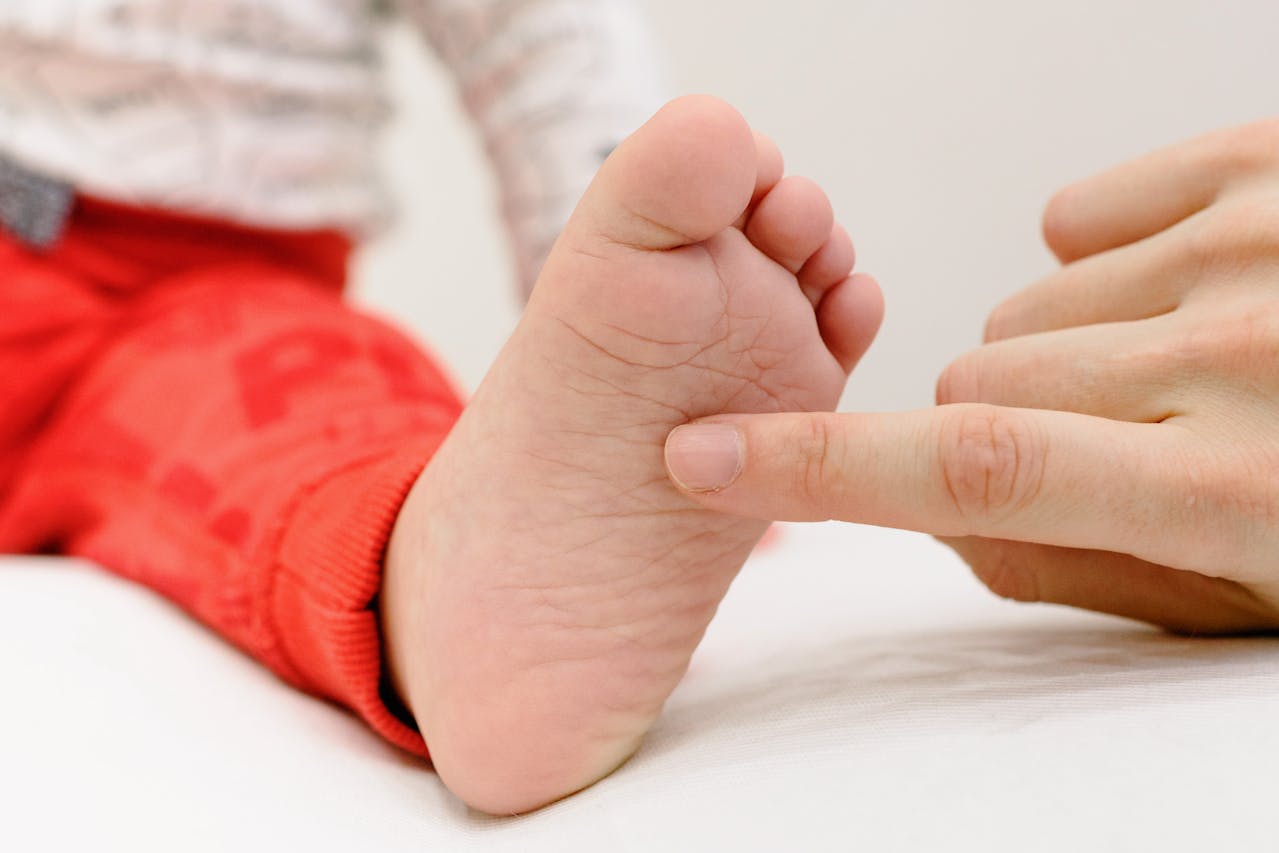
When your child wakes up with a fever and refuses to eat, you worry. When you see small blisters on their hands or sores in their mouth, that worry grows fast.
Hand, foot, and mouth disease is common in young children. It spreads quickly in daycares and schools. The good news is that most cases are mild and clear up in about a week. Still, parents need clear answers so they know what to watch for and when to call the doctor.
At Evans Medical Group, we care for children, teens, and adults across every stage of life. If your child is sick, you deserve calm guidance and a plan you trust.
Key Takeaways
- Hand, foot, and mouth disease is a common viral illness in children under age 5
- Early signs often include fever, sore throat, and low appetite
- Painful mouth sores and a rash on the hands and feet usually follow
- Most children recover in 7 to 10 days with supportive care
- Children are most contagious during the first week
- Watch for signs of dehydration or fever above 103 degrees
- Good handwashing and cleaning shared surfaces lowers the risk of spread
What Is Hand, Foot, and Mouth Disease?
Hand, foot, and mouth disease, often called HFMD, is a viral illness. It is most often caused by coxsackievirus A16 and enterovirus 71.
The Centers for Disease Control and Prevention reports that HFMD is common in infants and children younger than 5 years old. Older children and adults can get it too, but they often have milder symptoms.
Outbreaks happen most often in late summer and early fall in the United States. However, cases can occur any time of year, especially in group settings like schools and childcare centers.
HFMD is usually mild. It can still make your child feel miserable for several days. Knowing what to expect can help you respond with confidence.
How Does Hand, Foot, and Mouth Disease Spread?
HFMD spreads easily. The virus passes from person to person through:
- Respiratory droplets from coughing or sneezing
- Saliva or nasal mucus
- Fluid from blisters
- Stool during diaper changes
- Contaminated toys, tables, and doorknobs
Children are most contagious during the first week of illness. However, the virus can remain in stool for several weeks after symptoms are gone.
A study published in Clinical Infectious Diseases found that household transmission is common, especially between siblings. That means if one child gets HFMD, others in the home may follow.
Frequent handwashing with soap and water for at least 20 seconds is one of the most effective ways to reduce spread. Alcohol-based hand sanitizers can help, but soap and water work best after diaper changes.
Early Signs and Symptoms Parents Should Watch For
HFMD often starts like many other viral illnesses. Early symptoms may include:
- Fever, often between 101 and 103 degrees
- Sore throat
- Fatigue
- Reduced appetite
Within one or two days, other symptoms appear.
Painful mouth sores are common. These may start as small red spots and then turn into blisters. They often appear on the tongue, gums, and inside of the cheeks. Because these sores hurt, your child may refuse food or drinks.
A skin rash usually follows. The rash may include:
- Flat red spots
- Small fluid-filled blisters
- Spots on the palms, soles, buttocks, or legs
The rash is not usually itchy. It may look alarming, but in most cases it heals without scarring.
The Cleveland Clinic notes that symptoms typically last 7 to 10 days.
What Does the Rash Look Like?
Parents often worry the rash is chickenpox or an allergic reaction.
HFMD rash is usually:
- Located on hands and feet
- Made up of small red spots or blisters
- Not very itchy
Chickenpox tends to cause itchy blisters across the entire body, including the scalp. HFMD usually stays on the hands, feet, mouth, and sometimes the buttocks.
If you are unsure what you are seeing, a primary care provider can examine your child and confirm the diagnosis.
How Long Does Hand, Foot, and Mouth Disease Last?
In most children:
- Fever lasts 1 to 3 days
- Mouth sores last about 5 to 7 days
- Skin rash lasts up to 10 days
Some children may have peeling skin on their fingers or toes as they heal. In rare cases, fingernails or toenails may shed weeks later. While this can look scary, nails usually grow back normally.
According to data from the CDC, serious complications are rare in the United States. Most children recover fully with no long-term problems.
Home Care and Treatment
There is no specific cure for HFMD. Antibiotics do not work because it is caused by a virus.
Treatment focuses on comfort and preventing dehydration.
You can help your child by:
- Offering cold fluids such as water or milk
- Giving popsicles to soothe mouth pain
- Serving soft foods like yogurt, applesauce, or mashed potatoes
- Avoiding spicy, salty, or acidic foods
- Using age-appropriate fever reducers if needed
Always follow dosing instructions for medications like acetaminophen or ibuprofen. Do not give aspirin to children.
Hydration is key. Painful mouth sores can lead to dehydration, especially in toddlers. Watch for:
- Dry mouth
- No tears when crying
- Fewer wet diapers
- Dark yellow urine
- Lethargy
If you notice these signs, contact your child’s healthcare provider right away.
When Should You Call the Doctor?
Most cases of HFMD can be managed at home. However, you should call your doctor if your child has:
- Fever above 103 degrees
- Fever lasting more than 3 days
- Signs of dehydration
- Severe headache
- Stiff neck
- Unusual sleepiness or confusion
Enterovirus 71, one cause of HFMD, has been linked to rare neurological complications in some countries. While these cases are uncommon in the United States, it is important to seek care if symptoms seem severe.
At Evans Medical Group, our pediatric and family practice providers take time to listen to your concerns. If your child feels worse instead of better, we can evaluate them and guide your next steps.
Can Adults Get Hand, Foot, and Mouth Disease?
Yes. Adults can get HFMD, especially parents, teachers, and caregivers.
Adults may experience:
- Mild fever
- Sore throat
- Rash on hands or feet
Some adults have no symptoms at all but can still spread the virus.
Good hygiene practices protect the whole family. Wash hands after diaper changes. Clean shared surfaces daily. Avoid sharing cups or utensils.
When Can Your Child Return to School or Daycare?
Many schools and daycare centers follow similar return guidelines.
In general, your child can return when:
- Fever is gone for 24 hours without medication
- They feel well enough to participate
- Blisters are dry or improving
Because the virus can remain in stool, strict handwashing should continue even after your child returns to normal activities.
If you need guidance specific to your child’s situation, your primary care provider can help you decide what is safe.
Prevention Tips for Families
You cannot prevent every illness. However, you can lower the risk of HFMD with simple steps.
- Wash hands often with soap and water
- Clean and disinfect toys daily
- Avoid close contact with infected individuals
- Teach children to cover coughs and sneezes
- Do not share cups, utensils, or towels
A study in the Journal of Infectious Diseases found that consistent hand hygiene in childcare settings significantly reduced the spread of enteroviruses.
Prevention takes daily effort, but it makes a real difference.
Possible Complications
Most children recover without problems. Rare complications may include:
- Dehydration
- Viral meningitis
- Encephalitis
Viral meningitis linked to enteroviruses can cause headache, stiff neck, and sensitivity to light. These cases are uncommon but require medical care.
If your child has severe symptoms, do not wait. Seek medical evaluation.
The Role of Your Primary Care Provider
Having a trusted primary care provider gives you peace of mind during moments like this.
At Evans Medical Group, we offer comprehensive care for children, adults, and active seniors. Our team provides pediatric care, family practice, and internal medicine services under one roof.
We believe healthcare should feel personal. We take time to answer your questions and support your family through both minor illnesses and long-term health needs.
If your child develops fever, rash, or mouth sores, we can assess symptoms, confirm the diagnosis, and help you manage recovery at home.
Caring for Your Child With Confidence
Seeing your child uncomfortable is hard. Mouth sores make eating painful. Fever makes them tired and irritable.
Remember these key points:
- HFMD is common and usually mild
- Most children recover within a week
- Focus on fluids and comfort
- Watch for warning signs
- Call your doctor if you are unsure
You do not have to manage childhood illness alone. Compassionate, consistent care matters.
If your child has symptoms of hand, foot, and mouth disease or you want guidance from a trusted medical team, schedule an appointment with Evans Medical Group today. Our providers are here to care for your family with respect, integrity, and attention to your needs.
Frequently Asked Questions
What are the first signs of hand, foot, and mouth disease?
The first signs often include fever, sore throat, fatigue, and low appetite. Mouth sores and a rash usually appear within one to two days after the fever starts.
How long is hand, foot, and mouth disease contagious?
Children are most contagious during the first week of illness. The virus can remain in stool for several weeks, which is why careful handwashing is important even after symptoms improve.
How do I know if it is hand, foot, and mouth disease or chickenpox?
HFMD usually causes sores in the mouth and a rash on the hands and feet. Chickenpox tends to cause itchy blisters all over the body. A healthcare provider can examine your child and confirm the diagnosis.
What can I give my child for mouth pain?
Offer cold drinks, popsicles, and soft foods. Avoid spicy or acidic foods. Use age-appropriate fever and pain reducers as directed by your doctor.
Can my child get hand, foot, and mouth disease more than once?
Yes. Different viruses can cause HFMD. Your child may get it again if exposed to a different strain.
Is hand, foot, and mouth disease dangerous?
Most cases are mild and resolve without complications. Serious complications are rare in the United States. Seek medical care if your child shows signs of dehydration, severe headache, stiff neck, or unusual behavior.
Should siblings stay home if one child has HFMD?
If siblings do not have symptoms, they can often continue normal activities. Monitor them closely for fever or rash. Practice strict hand hygiene at home to reduce spread.
If you ever feel uncertain about your child’s symptoms, reach out for guidance. Trusted primary care makes a difference when your family needs it most.