
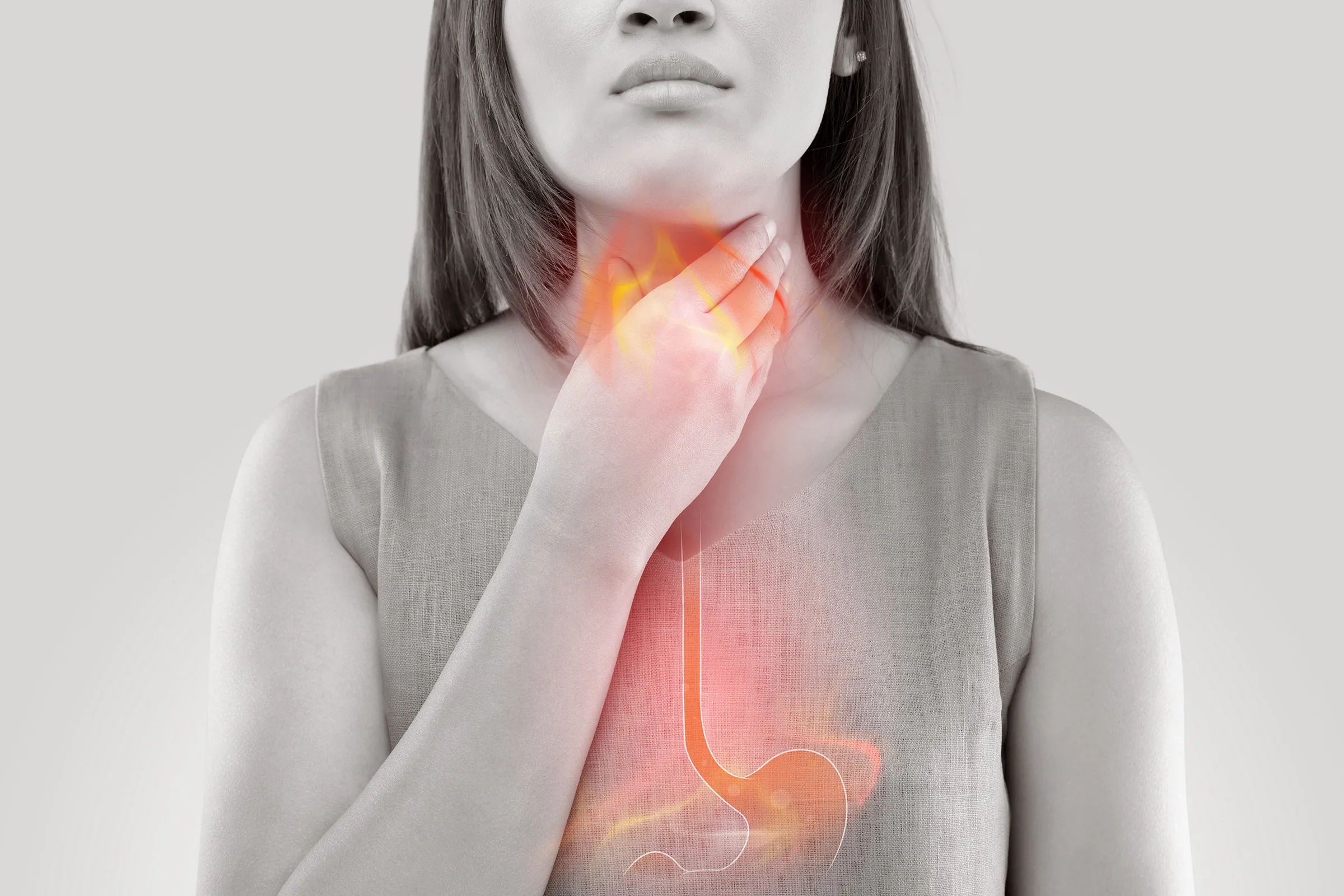
Many people use the terms acid reflux and heartburn as if they mean the same thing. They are related, but they are not identical.
Acid reflux is a digestive condition. Heartburn is a symptom that often happens because of that condition.
Understanding the difference can help you recognize symptoms earlier and know when to seek medical care. For many people, reflux symptoms appear after meals, at night, or when lying down. In some cases, the symptoms may signal a more serious condition called GERD.
This guide explains how acid reflux and heartburn differ, what causes them, and when it may be time to see a doctor.
Key Takeaways
- Acid reflux happens when stomach acid flows back into the esophagus.
- Heartburn is the burning chest feeling caused by acid reflux.
- Heartburn is a symptom, not a medical condition.
- Frequent reflux may indicate GERD.
- Lifestyle changes and medical care can help control symptoms.
What Is Acid Reflux?
Acid reflux occurs when stomach acid flows upward into the esophagus. The esophagus is the tube that carries food from your mouth to your stomach.
During normal digestion, a small muscle called the lower esophageal sphincter opens to allow food into the stomach. After food passes through, the muscle closes to keep stomach contents in place.
When this muscle weakens or relaxes at the wrong time, stomach acid can move back into the esophagus. This backflow is called acid reflux.
Because the esophagus does not have the same protective lining as the stomach, acid can irritate its walls.
Common symptoms of acid reflux include:
- Sour or bitter taste in the mouth
- Food or liquid coming back into the throat
- Persistent cough
- Sore throat
- Trouble swallowing
- Chest discomfort
Some people experience acid reflux without noticeable heartburn. Instead, they may notice throat irritation, coughing, or a constant need to clear their throat.
What Is Heartburn?
Heartburn is a symptom that often results from acid reflux. It is the burning sensation many people feel in the center of the chest.
The pain usually appears behind the breastbone and may move upward toward the throat.
Heartburn symptoms often occur:
- After eating large meals
- After eating spicy or fatty foods
- When lying down soon after eating
- At night while sleeping
People often describe heartburn as a burning or pressure in the chest. Despite its name, it does not involve the heart.
The discomfort happens because stomach acid irritates the lining of the esophagus. Even small amounts of acid can cause this burning feeling.
Acid Reflux vs. Heartburn, The Key Difference
The simplest way to understand the difference is this.
- Acid reflux is the condition.
- Heartburn is the symptom.
Acid reflux describes the movement of stomach acid into the esophagus. Heartburn describes the burning sensation that happens when acid irritates the esophageal lining.
Many people use the terms interchangeably because heartburn is the most common symptom of reflux.
However, not everyone with acid reflux experiences heartburn. Some people mainly notice throat symptoms, coughing, or regurgitation.
Recognizing this difference helps doctors determine the best treatment approach.
What Causes Acid Reflux and Heartburn?
Several factors can increase the risk of acid reflux. These factors often weaken the lower esophageal sphincter or increase pressure on the stomach.
Certain foods commonly trigger symptoms.
Common food triggers include:
- Fatty foods
- Chocolate
- Citrus fruits
- Tomatoes
- Spicy foods
- Caffeinated drinks
Large meals can also increase pressure in the stomach. This pressure makes it easier for acid to move upward.
Lifestyle habits can also play a role.
Common lifestyle triggers include:
- Eating large portions
- Lying down soon after meals
- Smoking
- Drinking alcohol
- Excess body weight
Medical conditions can also increase reflux risk. Pregnancy, for example, increases pressure on the stomach and often causes reflux symptoms.
A condition called hiatal hernia can also contribute to reflux. This occurs when part of the stomach moves upward through the diaphragm.
When Acid Reflux Becomes GERD
Occasional reflux is common. Many adults experience symptoms from time to time, especially after large meals.
However, when reflux occurs frequently, it may develop into gastroesophageal reflux disease, commonly called GERD.
Doctors often consider reflux to be GERD when symptoms occur two or more times per week or begin to damage the esophagus.
GERD can lead to complications if left untreated.
Possible complications include:
- Inflammation of the esophagus
- Difficulty swallowing
- Chronic cough
- Damage to the esophageal lining
Over time, ongoing irritation may lead to more serious changes in the esophagus.
Because of this risk, frequent symptoms should always be evaluated by a healthcare provider.
How Doctors Diagnose Acid Reflux
Doctors often begin with a review of your symptoms and medical history. This discussion helps identify possible triggers and patterns.
In many cases, doctors can diagnose reflux based on symptoms alone.
If symptoms are severe or persistent, additional testing may be recommended.
Common diagnostic tests include:
- Upper Endoscopy: A thin tube with a camera examines the esophagus and stomach.
- pH Monitoring: This test measures how often acid enters the esophagus.
- Esophageal Manometry: This test evaluates the strength and coordination of esophageal muscles.
These tests help doctors confirm the diagnosis and rule out other conditions.
Treatments That Help Manage Symptoms
Treatment for acid reflux often starts with lifestyle changes. Small adjustments can reduce symptoms for many people.
Helpful lifestyle changes include:
- Eating smaller meals
- Avoiding food triggers
- Waiting several hours before lying down after meals
- Maintaining a healthy weight
- Raising the head of the bed during sleep
Doctors may also recommend medications to reduce acid production or protect the esophagus.
Common medications include:
- Antacids: These provide quick relief by neutralizing stomach acid.
- H2 Blockers: These medications reduce acid production.
- Proton Pump Inhibitors: These medications strongly reduce stomach acid and allow the esophagus to heal.
Your doctor will determine the best treatment plan based on the frequency and severity of your symptoms.
When You Should See a Doctor
Occasional heartburn may not require medical care. However, certain symptoms should never be ignored.
You should see a doctor if you experience:
- Heartburn more than twice per week
- Difficulty swallowing
- Persistent chest pain
- Ongoing cough or throat irritation
- Unexplained weight loss
- Vomiting
These symptoms may indicate GERD or another digestive condition that requires treatment.
Early evaluation can prevent complications and improve long term digestive health.
How Evans Medical Group Can Help
Digestive symptoms can disrupt daily life. Persistent heartburn, throat irritation, or chest discomfort should not be ignored.
At Evans Medical Group, patients receive compassionate primary care focused on long term health and well being. The team works with individuals and families to identify the cause of symptoms and create a clear care plan.
Primary care providers can evaluate reflux symptoms, recommend treatment options, and monitor your digestive health over time. Early care can help reduce symptoms and prevent complications.
If acid reflux or heartburn is affecting your comfort, a trusted primary care provider can help guide your next steps.
Acid Reflux And Heartburn Are Closely Connected, But They Are Not The Same
Acid reflux describes the condition where stomach acid flows back into the esophagus. Heartburn is the burning sensation that often follows.
Understanding the difference helps you recognize symptoms earlier and take action when needed.
If symptoms occur frequently or interfere with your daily life, medical evaluation is important.
Call Evans Medical Group today to schedule an appointment and get support for your digestive health.
Frequently Asked Questions
What is the difference between acid reflux and heartburn?
Acid reflux is the condition where stomach acid flows into the esophagus. Heartburn is the burning chest sensation caused by that reflux.
Can you have acid reflux without heartburn?
Yes. Some people experience throat irritation, coughing, or regurgitation without the typical burning sensation.
What foods trigger acid reflux?
Common triggers include fatty foods, chocolate, citrus fruits, tomatoes, spicy foods, and caffeinated drinks.
How often is acid reflux considered GERD?
Reflux that occurs two or more times per week may be considered GERD, especially if it damages the esophagus.
When should I see a doctor for heartburn?
You should see a doctor if symptoms occur frequently, worsen over time, or include trouble swallowing, chest pain, or unexplained weight loss.